
Rules & Safety
Environmental Rules for Florida Boaters
Manatee zones, seagrass prop scars, sewage and pump-outs, trash and oil rules, and protected wildlife: the environmental laws Florida boaters must follow.
Last reviewed: See official sources

Florida's shallow bays, seagrass beds, springs and coastlines support manatees, sea turtles, dolphins and some of the country's most important fisheries. Several state and federal laws apply directly to boaters here, and many are enforced through posted zones that change from county to county. This page explains what those rules require and how to stay within them.
At a glance
- It is illegal to harass, disturb, injure or kill a manatee or sea turtle in Florida.
- Manatee protection zones are posted with signs; many are seasonal.
- Scarring seagrass through careless operation in most aquatic preserves is an infraction.
- Raw sewage may not be discharged from any vessel in Florida waters.
- Discharging plastic is illegal everywhere, and any garbage is prohibited in U.S. navigable waters.
Manatees and speed zones
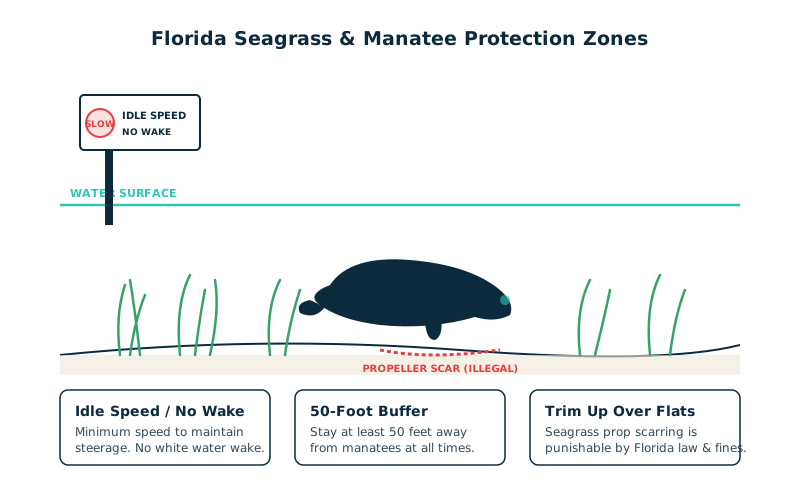
Florida is a refuge and sanctuary for the manatee under the Florida Manatee Sanctuary Act (opens in a new tab). It is unlawful to intentionally or negligently annoy, molest, harass or disturb a manatee, to injure or harm one, or to pursue, capture or kill one. A boat used in a violation can be forfeited on conviction.
FWC sets speed and operation rules for manatee protection by rule, and counties may have additional local zones. Zones are marked by waterway signs and may restrict speed to idle or slow speed, or close an area to boats, sometimes only for part of the year. FWC publishes manatee protection zone maps (opens in a new tab) online.
Around manatees
- Read every sign as you enter a new waterway, including the dates on seasonal zones.
- Wear polarized sunglasses and watch for swirls, snouts and the circular "footprints" manatees leave on the surface.
- Stay in marked channels where you can, since manatees often feed in shallow seagrass.
- If you see a manatee near your path, slow down and steer around it.
- Never feed, water or chase a manatee.
Sea turtles and other wildlife
Florida law protects all marine turtle species, their hatchlings, eggs and nests. Taking, harassing or disturbing them is prohibited (s. 379.2431 (opens in a new tab)). Watch for turtles surfacing to breathe, especially near reefs and inlets, and slow down when you see one.
Dolphins and other marine mammals are protected by federal law. Watch from a distance, do not feed them and do not chase or circle them with your boat. Shorebirds nesting on islands and sandbars can also be disturbed by boats landing too close; give posted nesting areas plenty of space.
Seagrass and shallow water
Seagrass is the base of Florida's inshore ecosystems, and Florida law declares its preservation essential. Under s. 253.04 (opens in a new tab), operating a vessel carelessly outside a marked channel in a way that scars seagrass within most state aquatic preserves is a noncriminal infraction, and each violation is a separate offense. Local governments and FWC can also create boating-restricted areas to protect seagrass (s. 327.46 (opens in a new tab)).
Prop scars tear out roots and shoots and are slow to recover. To avoid them:
- Know the tide and check a chart before entering flats. See Maps & Routes.
- Stay in marked channels and avoid trimming down in shallow water.
- If you run aground, stop the engine, tilt it up and pole, push or wait for the tide instead of powering off.
Sewage, trash and fuel
Sewage and pump-outs
Florida's rules are stricter than the federal baseline. Under s. 327.53 (opens in a new tab):
- Raw sewage may not be discharged from any vessel, including houseboats, in Florida waters.
- If your boat is plumbed so a toilet or holding tank can drain overboard, you must set the valve to prevent discharge and lock or secure it while on state waters.
- Holding tank (Type III device) waste must go to an approved pump-out facility, and portable toilet waste to an approved reception facility.
- Boats 26 feet or longer with an enclosed cabin and berths must have a toilet.
Violations are noncriminal infractions, and the owner and operator can both be liable. Federal no-discharge zones also apply where designated. Many marinas offer pump-out service; Florida's Clean Marina Program (opens in a new tab) recognizes facilities that follow environmental best practices.
Trash and fishing line
Under federal law, discharging plastic is illegal everywhere, and discharging any garbage into U.S. navigable waters, including inland waters, is illegal. U.S. boats 26 feet and longer must display a garbage discharge placard. Bring all trash and used fishing line back to shore; discarded line entangles birds, turtles and manatees.
Oil and fuel
Federal law prohibits discharging oil or oily waste into navigable waters, including anything that leaves a sheen. Boats 26 feet and longer with machinery spaces must post an oil discharge placard. Use absorbent pads when fueling and in the bilge, and never pump an oily bilge overboard. Report any spill to the Coast Guard National Response Center at (800) 424-8802.
Harassing a manatee or sea turtle can bring state and federal penalties, and the boat used can be forfeited. When in doubt, slow down, give wildlife room and leave the area.
Invasive species: clean, drain, dry
Boats, trailers and gear can carry plants and small animals from one waterbody to the next. In Florida's warm lakes, rivers and canals, those hitchhikers can take hold fast. Hydrilla is the classic example: the U.S. Geological Survey's hydrilla fact sheet (opens in a new tab) says it reached Florida's inland waters in the 1950s after aquarium plants were discarded into canals in Tampa and Miami. It now spreads mainly as fragments on recreational boats, motors, trailers and live wells, and new colonies often start near boat ramps. Dense mats crowd out native plants and clog water flow.
Animals spread the same way. NOAA lists released aquarium specimens and bait among the ways invasive species (opens in a new tab) reach new waters.
The national Clean Drain Dry routine, from the Stop Aquatic Hitchhikers (opens in a new tab) campaign of the federal Aquatic Nuisance Species Task Force, takes a few minutes at the ramp:
Every launch, every waterbody
- Clean off visible plants, animals and mud from the boat, motor, trailer, anchor and gear before you leave the ramp area. Paddlers should clean hulls, paddles and ropes too.
- Drain the motor, bilge, live well and anything else that holds water before you leave the water access.
- Dry everything before your next trip to a different waterbody, or wipe it down with a towel.
- Dispose of unwanted bait, worms and fish parts in the trash, not in the water or on land.
- Never dump live fish, bait or aquarium plants and animals from one waterbody into another.
Following this routine on every trip also keeps weed off your props and out of your cooling water intakes. See Trailering a Boat in Florida for ramp habits that fit into it.
Plan greener trips
Choosing destinations with marked channels, public pump-outs and clear wildlife rules makes compliance easier; see Destinations. For courtesy rules that also protect shorelines, such as controlling your wake, read Boating Etiquette. Speed zones for safety reasons are covered in Florida Boating Regulations.
Official sources
Check posted signs and current zone maps with the Florida Fish and Wildlife Conservation Commission (opens in a new tab), and read s. 379.2431 (opens in a new tab) and s. 327.53 (opens in a new tab) of the Florida Statutes for the current wording.
Frequently asked questions
How do I know if I am in a manatee zone?
Manatee protection zones are marked by waterway signs that state the speed rule and, for seasonal zones, the dates it applies. FWC also publishes zone maps online. Obey the sign you see on the water.
Can I empty my holding tank in Florida waters?
No. Florida law prohibits discharging raw sewage from any vessel in state waters. Holding tank waste must go to an approved pump-out facility, and portable toilet waste to an approved reception facility.
Is it illegal to run aground on seagrass in Florida?
Careless operation outside a marked channel that scars seagrass in most Florida aquatic preserves is a noncriminal infraction, and each violation counts separately. Reading the water and staying in channels avoids it.
What should I do if I see an injured manatee?
Keep your distance and report it to FWC. Do not try to touch, feed or help the animal yourself.
Official sources
- Florida Statutes, s. 379.2431 — Marine animals; Florida Manatee Sanctuary Act; marine turtle protection (opens in a new tab)
- Florida Statutes, s. 253.04 — Seagrass scarring in aquatic preserves (opens in a new tab)
- Florida Statutes, s. 327.46 — Boating-restricted areas (opens in a new tab)
- Florida Statutes, s. 327.53 — Marine sanitation (opens in a new tab)
- U.S. Coast Guard — A Boater's Guide to the Federal Requirements for Recreational Boats (opens in a new tab)
- FWC — Boating Regulations (manatee protection zones) (opens in a new tab)
- Florida Department of Environmental Protection — Clean Marina Program (opens in a new tab)
- U.S. Geological Survey — Hydrilla verticillata fact sheet (Nonindigenous Aquatic Species) (opens in a new tab)
- Aquatic Nuisance Species Task Force — Stop Aquatic Hitchhikers: Clean Drain Dry (opens in a new tab)
- NOAA National Ocean Service — What is an invasive species? (opens in a new tab)
Checked against these sources on . Rules change — confirm current requirements with the official source before you rely on them.


